


Description
Heart Giver (Coeurdonnier) – Children, Service, and Social Order in Contemporary Art
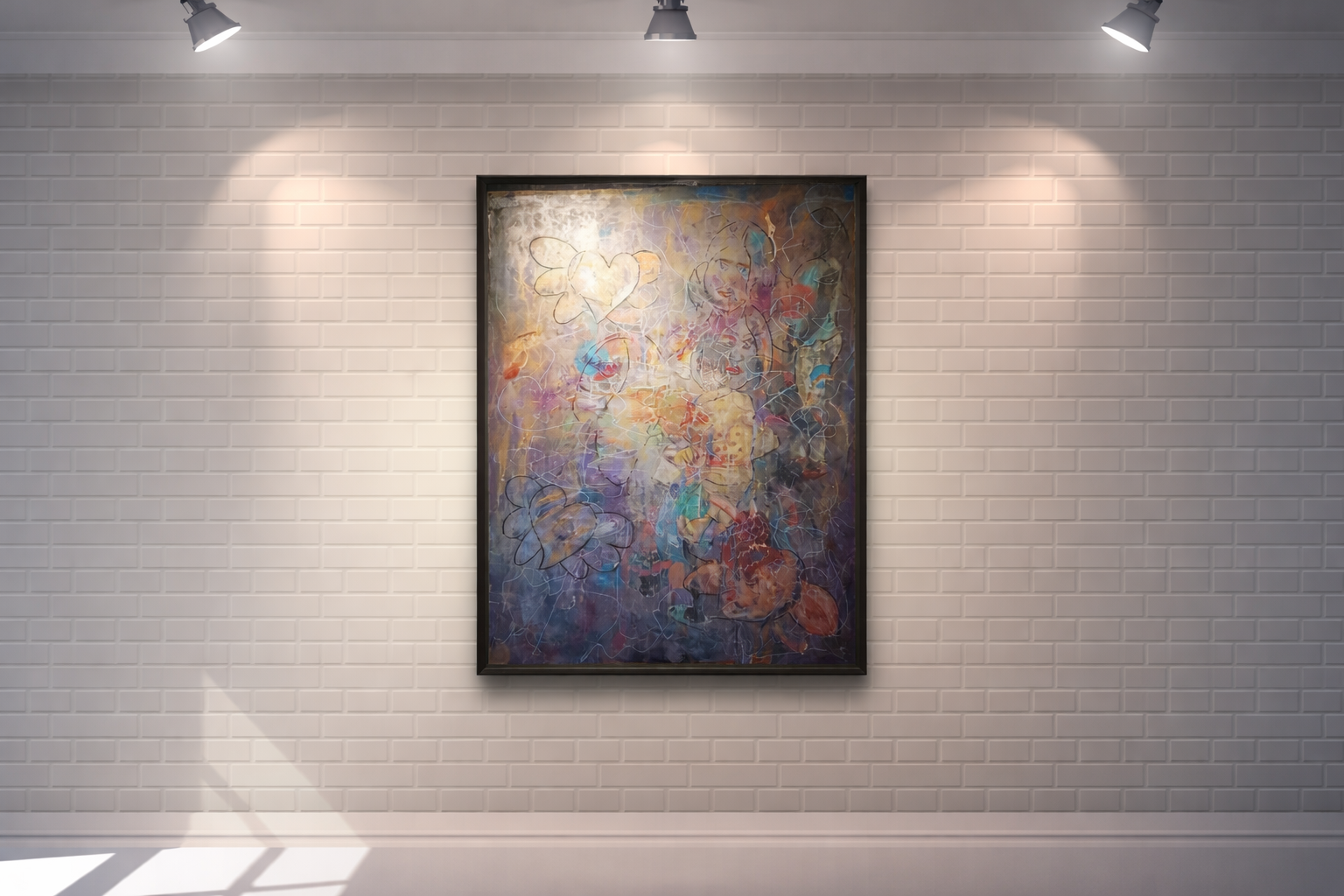
Heart Giver (Coeurdonnier) is a contemporary artwork that explores the place of children within the social structure and their role in serving, supporting, and learning from adult society. Rooted in symbolism rather than literal representation, the painting presents service not as submission, but as a form of ordered participation — a conscious contribution shaped by education, respect, and emotional intelligence.
Dimensions 119 x 150 cm
The title Heart Giver conveys the essence of the artwork. It suggests generosity guided by structure, the act of giving not impulsively but with purpose and discipline. In this context, the child is portrayed as someone who offers attention, effort, and commitment to the collective good. The artwork emphasizes that service is not accidental; it is taught, transmitted, and organized within a social framework.
Visually, the composition is built through dense layers of color, gesture, and texture. Abstract forms overlap and intertwine, creating a sense of movement and continuity. This visual complexity mirrors the process of learning social responsibility, where guidance, correction, and repetition shape behavior over time. The absence of rigid outlines allows figures and symbols to emerge fluidly, suggesting that children evolve through interaction with their environment rather than through isolation.
Color plays a central symbolic role in Heart Giver. Soft yet vibrant tones convey emotional openness, while deeper hues introduce seriousness and discipline. This chromatic balance reflects the dual nature of service: it requires both empathy and structure. Lighter areas evoke innocence and generosity, while darker sections ground the composition in order and responsibility. Together, they form a visual dialogue between childhood sensitivity and societal expectations.
The abstract figurative elements suggest the presence of youthful forms without defining them explicitly. This artistic choice universalizes the message of the artwork. The children represented are not individuals but symbols of a collective generation learning how to function within adult society. Their service is portrayed as organized and intentional, reinforcing the idea that social harmony depends on education and shared values rather than instinct alone.
At a deeper level, Heart Giver (Coeurdonnier) reflects a philosophy of transmission. Children are not passive recipients of societal rules; they are participants who learn to give, assist, and contribute through observation and example. The artwork highlights the importance of guidance in shaping these behaviors. Service, in this sense, becomes an educational tool — a way for children to understand responsibility, respect, and belonging.
The layered surface of the painting invites prolonged observation. Details emerge gradually, echoing the slow and continuous nature of learning. This visual experience parallels the way children internalize social norms over time, through repetition and practice. The painting does not glorify chaos or spontaneity; instead, it celebrates structured growth and emotional discipline.
From a social perspective, Heart Giver offers a reflection on collective balance. Adult society is sustained not only by authority but by the willingness of younger generations to engage constructively. The artwork suggests that teaching children how to serve responsibly is an act of empowerment rather than control. Service becomes a pathway to autonomy, dignity, and mutual respect.
Stylistically, the painting aligns with contemporary abstract expression, using gesture and texture to convey meaning beyond narrative. The energy of the composition feels controlled rather than erratic, reinforcing the theme of order. Movement exists, but it is guided — much like the service the artwork describes.
Ultimately, Heart Giver (Coeurdonnier) is a meditation on social cohesion and moral education. It honors the role of children as future pillars of society and emphasizes that generosity gains strength when shaped by structure. The painting invites viewers to reconsider the value of service as an act of learning, discipline, and shared responsibility.
This artwork is a meaningful addition to collections focused on contemporary social themes, education, childhood development, and the ethical foundations of community life. Heart Giver stands as a visual reminder that the heart, when guided by order, becomes a force for collective growth.


