


Description
Culture of the West (Cameroon) – A Mythical Initiated Dancer and the Spirit of Tradition
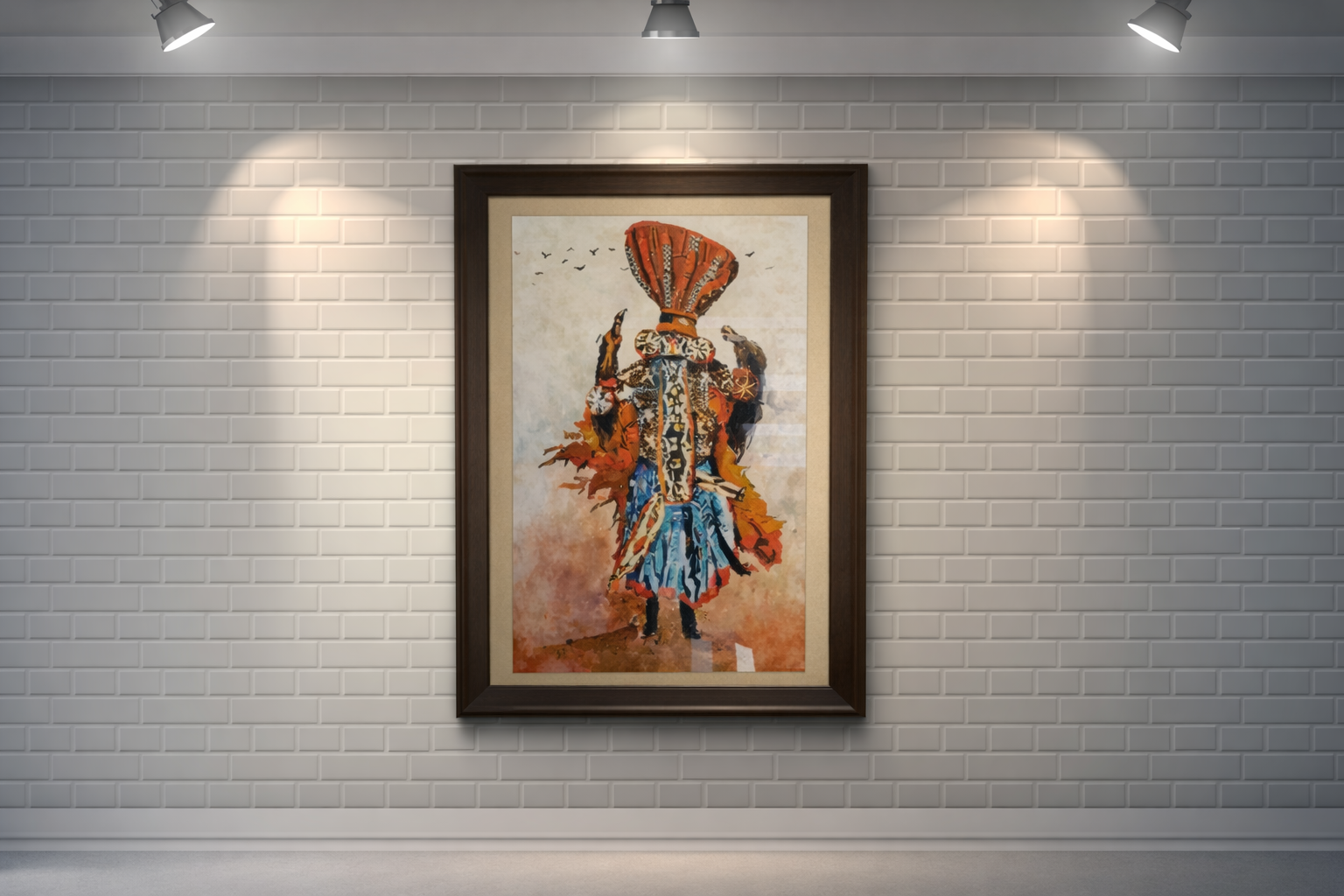
Culture of the West (Cameroon) is a powerful contemporary artwork that pays tribute to the rich cultural heritage of Western Cameroon through the representation of a mythical initiated dancer. Rooted in tradition and symbolism, the painting explores dance not merely as performance, but as a sacred language shaped by initiation, spiritual transmission, and ancestral memory. The artwork stands as a visual celebration of cultural identity and continuity.
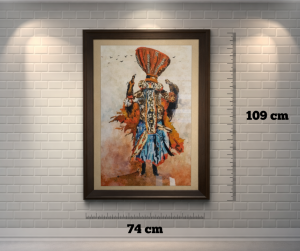
Dimensions 74 x 109 cm
At the center of the composition stands an initiated dancer, depicted in elaborate ceremonial attire. The figure is rendered with expressive abstraction, allowing movement and symbolism to take precedence over realism. The dancer’s posture suggests elevation and transformation, as if suspended between the physical and spiritual worlds. This sense of transcendence reflects the role of initiation within the cultures of Western Cameroon, where knowledge is earned through time, discipline, and ritual passage.
The attire of the dancer is richly detailed and highly symbolic. Layers of fabric, patterns, and ornaments form a visual language that speaks of status, lineage, and sacred function. Each element of the costume appears intentional, reinforcing the idea that initiation grants access to a deeper cultural code. The dancer is not anonymous; he embodies the collective memory of those who have been initiated before him. Through this figure, the artwork honors the guardians of tradition who carry ancestral knowledge forward.
Color plays a vital role in shaping the emotional and spiritual tone of the painting. Warm earth tones anchor the figure to the land, evoking ancestry, soil, and origin. In contrast, vibrant blues, reds, and oranges introduce movement, energy, and vitality. This interplay of colors mirrors the dual nature of the initiated dancer — grounded in tradition yet animated by spiritual force. The palette reinforces the rhythmic quality of the composition, making the painting feel alive and ceremonial.
Birds appear subtly in the background, adding a layer of symbolic meaning. Often associated with freedom, transcendence, and communication between worlds, they echo the dancer’s elevated status. Their presence reinforces the idea of spiritual ascent, suggesting that initiation allows the individual to access higher realms of understanding. The background itself remains deliberately textured and atmospheric, creating a timeless space where myth and reality converge.
The abstract figurative style encourages interpretation while maintaining cultural specificity. Facial features are not sharply defined, allowing the dancer to become a universal symbol rather than a portrait of an individual. This artistic choice broadens the scope of the artwork, transforming it into a representation of collective identity rather than personal narrative. The initiated dancer becomes an emblem of Western Cameroonian culture as a whole.
Beyond its visual impact, Culture of the West (Cameroon) functions as a statement on cultural preservation. In a rapidly changing world, traditional dances and initiation rites face the risk of erosion. This artwork asserts their continued relevance, presenting them not as relics of the past but as living expressions of identity. Dance is portrayed as an archive of knowledge, encoded in movement, costume, and rhythm.
The composition invites the viewer into a contemplative experience. The vertical orientation of the figure draws the eye upward, reinforcing themes of elevation and reverence. The surrounding space acts as a silent witness, emphasizing the solemnity and power of the initiated dancer’s presence. The viewer is not merely observing a performance, but encountering a ritual moment.
Ultimately, Culture of the West (Cameroon) is a homage to initiation, spirituality, and cultural resilience. It honors the dancers who embody tradition and the communities that sustain them. By merging contemporary artistic expression with ancestral symbolism, the artwork bridges past and present, offering a timeless reflection on identity and belonging.
This piece is a strong addition to collections focused on contemporary African art, cultural heritage, ritual symbolism, and the spiritual dimensions of performance. Culture of the West (Cameroon) invites viewers to engage with tradition not as spectacle, but as a profound and living force.


