


Description
The Coungan: Mystical Dance of the West
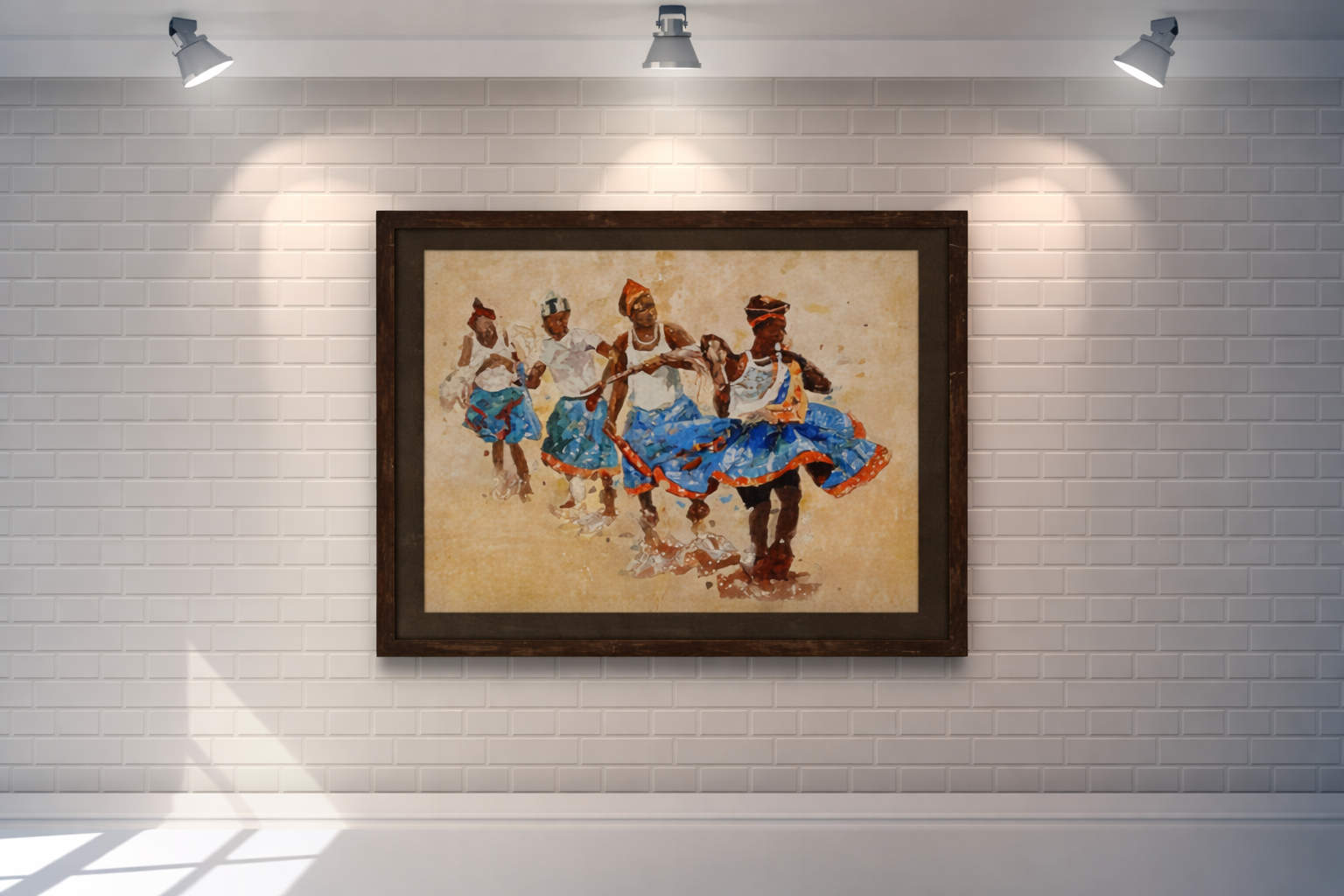
The painting “The Coungan: Mystical Dance of the West” is a major work of contemporary African art that immerses the viewer in the heart of the initiatory traditions of Western Cameroon. Through a scene of ritual dance, the artist highlights the initiates—central figures in traditional societies—bearers of ancestral knowledge, spirituality, and collective memory. This work goes beyond a simple visual representation; it stands as a true cultural and identity-based testimony.
The Coungan dance, at the center of the composition, is a mystical dance deeply rooted in the rites and initiatory ceremonies of Western Cameroon. It symbolizes passage, transformation, and the connection between the visible world and the spiritual realm. The bodies in motion, depicted with strength and dynamism, convey collective energy and the sacred dimension of this practice. Every posture and gesture seems to respond to an inner rhythm—almost invisible, yet ever-present.
One of the most remarkable aspects of this work lies in its mosaic technique created through the collage of fabrics. This artistic approach gives the painting a tactile and vibrant quality, reinforcing its authenticity. The assembled textile fragments evoke traditional fabrics, ritual costumes, and the richness of African textile heritage. This technical choice is far from incidental: it symbolizes the diversity of identities, paths, and individual histories which, once brought together, form a coherent and powerful whole.
Color plays a crucial role in the visual narrative of the work. The shades of blue, dominant in the costumes, evoke spirituality, depth, and a connection to invisible forces. The ochre and earthy tones, in turn, recall rootedness in the land, the ancestors, and tradition. Touches of red emphasize vital energy, ritual power, and the emotional intensity of the dance. Together, these elements create a chromatic harmony that reinforces the mystical and symbolic dimension of the painting.
The deliberate absence of detailed faces or precise features accentuates the universality of the figures represented. The initiates are not individualized; they embody a community, a lineage, a cultural continuity. This approach underscores the strength of the collective—a fundamental value of traditional African societies—where the individual finds meaning within the group. The viewer is thus invited to move beyond mere aesthetic observation and engage in a more spiritual and anthropological reading of the work.
“The Coungan: Mystical Dance of the West” is firmly rooted in a contemporary Cameroonian artistic approach that values tradition while reinterpreting it through modern techniques. The fabric collage, combined with an expressive pictorial composition, creates a dialogue between past and present, ancestral heritage and contemporary creation. The work becomes a bridge between generations, a space for transmission and reflection on cultural identity.
Beyond its artistic dimension, this painting pays tribute to the initiates, true guardians of rites, beliefs, and traditional knowledge. It underscores the importance of preserving and valuing these cultural practices in the face of the transformations of the modern world. Through this work, the artist affirms that tradition is not fixed, but alive—constantly evolving and capable of expressing itself powerfully through the language of contemporary art.
Through its symbolic richness, distinctive technique, and strong cultural grounding, “The Coungan: Mystical Dance of the West” emerges as a powerful work, both aesthetically compelling and deeply meaningful. It invites the viewer on a journey into the heart of African spirituality, toward the discovery of the initiatory rites of Western Cameroon, and into profound reflection on memory, identity, and transmission.


